Clear The Air Energy Blog Rotating Header Image

Hong Kong

Hong Kong will arrive at the Paris climate talks empty handed; let’s make sure it leaves with bold ideas to cut the city’s rising emissions

Gavin Edwards says the UN meeting in Paris offers an ideal opportunity for our environment secretary to learn about, and adopt, other cities’ pioneering efforts

Hong Kong’s Environment Secretary Wong Kam-sing will travel to Paris at the end of this month for the UN climate negotiations, where world governments will come together to agree a bold new set of targets and actions on climate change. The key outcome will hopefully be a new international agreement on the climate, applicable to all countries, with the aim of keeping global warming below 2 degrees Celsius. In preparation for the meeting, more than 150 countries have already indicated a number of pledges they may be willing to make – their Intended Nationally Determined Contributions – that can form part of the agreement. For example, the European Union pledges to cut its emissions by 40 per cent (from 1990 levels) by 2030, Costa Rica is aiming to be carbon neutral by 2021, and China aims to lower its carbon intensity by 60 to 65 per cent by 2030 (from 2005) and ensure its emissions peak by 2030.

unnamed (1)

As we approach the final weeks in the lead-up to the Paris agreement, a couple of challenges are emerging – one global, one local. The global challenge is that the intended contributions by all countries have been modelled by climate scientists and policy experts at Climate Action Tracker (an independent group of four leading research organisations), and they forecast that the world will see a 2.7 degree rise by late in the century if the Paris agreement succeeds and is implemented.

This falls well short of the 2 degree target governments are aiming for, and is a long way shy of the generally accepted safe temperature rise which our planet can tolerate: 1.5 degrees. And this is not just some academic numbers game. At 2.7 degrees warmer, we could experience significant food shortages globally as crops fail in sub-Saharan Africa, and our own major source of food – the Pearl River Delta – experiences increasing flooding. Even a 2 degree rise – the stated aim of the Paris agreement – spells the end of the world’s coral reefs and a whole host of other impacts driven by increasingly extreme weather patterns.

At 2.7 degrees warmer, we could experience significant food shortages globally as crops fail in sub-Saharan Africa

Second, the local challenge: Hong Kong’s contribution to averting catastrophic climate change. Wong gathered key government, corporate and NGO representatives together on November 6 to launch the Hong Kong Climate Change Report, outlining government efforts. However, instead of articulating a plan of action for the decades ahead, he summarised existing policies and efforts, and is taking a wait-and-see approach to the Paris climate negotiation so the government can then consider its next steps. This is odd, given that China (which reports and commits globally on its greenhouse gas emissions, including those of Hong Kong) has outlined its plan well beyond 2020. On a recent trip to the US, President Xi Jinping (習近平) articulated a range of measures, including greenhouse-gas emissions targets, investments in renewable energy, a national emission trading scheme to regulate large carbon dioxide emitters, and clear targets for green buildings.

unnamed (2)

Here in Hong Kong, the current plan is to reduce carbon dioxide emissions by 19 to 33 per cent by 2020 (from 2005), but that’s all. With current efforts, we’ll only achieve the low end of this target, and only if the long-promised initiative to reduce the burning of coal for electricity generation is implemented. Contrast this with cities around the world which will come together at a special event during the Paris negotiations, share their ambitious plans, and learn from each other. Greater Taipei will cut its emissions by 20 per cent by 2026 (from 2006), Yokohama will cut by 80 per cent by 2050 (from 2005), London by 60 per cent by 2025 (from 1990) and New York by 40 per cent by 2030 (from 1990). However, Hong Kong’s greenhouse gas emissions have been steadily rising over the past decade, by 23 per cent from 2002 to 2012.

The development of renewable energy in the city has barely begun. And CLP Power is proposing new gas-fired power generation instead of using renewable energy. The social cost of fossil fuel has never been mentioned, even in the latest document of the electricity market regulatory regime review. If our electricity market is not going to change, there is no chance for us to stop climate change. Under the Air Pollution Control Ordinance, carbon dioxide is not even considered a pollutant, even though it is widely agreed that ever-escalating carbon dioxide emissions are one of the largest threats to our planet and our city. Our electricity market is not ready to tackle climate change.

So, if the past decade was something of a lost decade for Hong Kong in terms of making a meaningful and commensurate contribution to tackling climate change, what should we do in the next decade, to catch up?

If our electricity market is not going to change, there is no chance for us to stop climate change

First, the Environment Bureau has a huge opportunity to address the lack of renewable energy development by adopting a comprehensive feed-in tariff policy to reward anyone who installs solar panels on rooftops or wind turbines in coastal waters. As the government wraps up its review of the Scheme of Control Agreement which governs our electricity production, it must include a renewable energy support policy, even if we are one of the last cities in Asia to adopt such a policy.

Second, it’s time for our private sector to put funding into renewable energy and energy efficiency development. Globally, there are more new investments in renewable energies such as wind and solar than there are in coal, gas and nuclear combined. They are effectively winning against these dirty energy sources, because governments around the world realise the importance of supporting safe, low-carbon energy. Some US$270 billion is being invested in low carbon development.

unnamed (3)

So instead of supporting CLP’s pitch to build another gas plant, the government should encourage future investment in renewables, and greater investment in energy efficiency. For example, a simple scheme to encourage all grocery and convenience shops to put doors on their display fridges will cut their fridge energy consumption by 50 per cent, according to recent WWF research.

Lastly, we need a plan for Hong Kong that goes beyond 2020. Our environment secretary arrives in Paris empty-handed without a longer-term plan while other cities profile theirs. However, it does not have to be a wasted journey – he will have an incredible opportunity to learn about the pioneering efforts of other cities, and to bring back ideas to adapt to Hong Kong. This can start with a plan to substantially cut our city’s emissions by 2030, and a plan to adopt a new scheme of control to encourage renewable energy development.

The difference between a world that is 2.7 degrees warmer and one that is only 1.5 degrees warmer is the difference between a liveable planet and a planet that is thrown into chaos. It’s time for Hong Kong to step up its efforts by leaving Paris with new ideas and bolder pledges to do much more. And when Hong Kong attends the next big climate conference in a few years’ time, I very much hope that these efforts will earn us international recognition as Asia’s sustainable city.

Gavin Edwards is conservation director at WWF-Hong Kong

Source URL: http://www.scmp.com/comment/insight-opinion/article/1880805/hong-kong-will-arrive-paris-climate-talks-empty-handed-lets
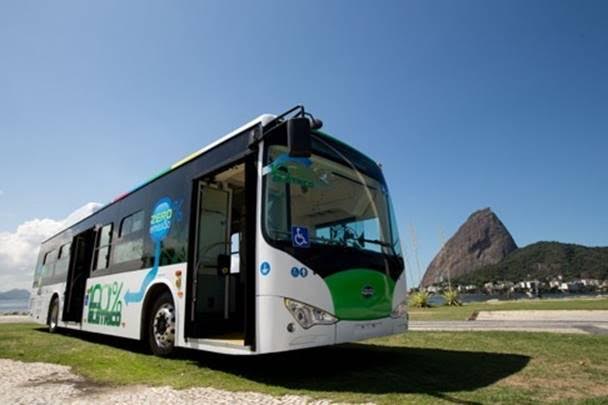
Electric taxi project in Hong Kong goes belly up: China’s BYD brands 2-year campaign a ‘failure’

Automaker also struggling to sell e-buses in city and has only received orders for 14 so far, it says

Chinese automaker BYD, which is partly owned by Warren Buffett’s Berkshire Hathaway, officially branded its two-year trial run of electric taxis in Hong Kong as a failure on Friday.

“I’m the one to take charge of BYD’s e-taxi project in Hong Kong,” said Ding Haimiao,assistant to the general manager at the carmaker.

“I have to say it’s a failure,” he added.

Ding made the comments to a group of academic and technology industry figures from Hong Kong during a speech in the southern Chinese city of Shenzhen.

In 2013, BYD chairman Wang Chuanfu said he expected the company to launch dozens of e6 electric car taxis in Hong Kong by the end of that year.

He predicted the number would grow to 1,000 by 2014 and 3,000 this year.

That didn’t happen.

BYD has still only launched 45 e6 cabs and three charging stations in Hong Kong – enough to cover 150 electric cabs, it said.

Ding insisted that the firm has proved to the local government that electric cabs can greatly benefit the city by saving energy costs and better protecting the environment

“I’m calling it a failure because we lost so much money from this project,” he said.

The automaker has made a series of investments to support this programme, for example covering the cost of charging stations and vehicle maintenance, he added.

unnamed


He said the model fits the local market but has nonetheless met with resistance from a number of industry figures, especially established taxi drivers.

“The Hong Kong government already knows [all] the figures and results, like the energy cost savings. But it really depends on the government [to see] how far it will go in moving forward this e-taxi plan,” he said.

It is normal for new policies from the government to inspire a backlash until doubts are cleared up, he said.

READ MORE: ‘Our business is tough enough’: Plan to launch premium taxi service in Hong Kong raises hackles [3]

In another part of its electric push, BYD has also made slow progress in pressing ahead with electric buses in Hong Kong, Ding said.

The company has so far received orders for 14 of these in Hong Kong, but the number of orders pales compared to other traffic-heavy markets in which it operates, he added.

BYD said last week it plans to sell 15,000 electric taxis and 6,000 electric buses this year.

Analysts say 95 per cent of these are likely destined for China.

In April, the company won an order from the state of California to deliver 60 electric buses.

Hong Kong’s CLP, HK Electric could be victims of Norwegian fund sell-off

http://www.scmp.com/news/hong-kong/article/1817770/hong-kongs-clp-hk-electric-could-be-victims-norwegian-fund-sell

Power companies CLP and HK Electric could be the innocent victims of a decision by Norway’s parliament to sell off coal investments in the country’s US$880 billion sovereign wealth fund.

According to new rules approved by the Norwegian parliament’s finance committee on Friday, the Government Pension Fund Global – also known as the oil fund because of its funding from oil and gas production – will sell stakes in companies that get at least 30 per cent of their revenue from coal mining or burning fossil fuels or ongoing projects that surpass the 30 per cent threshold.

The measures are to be implemented by January 1, 2016.

The move was welcomed by the country’s lawmakers and environmental groups who estimate the fund’s investments in coal could be more than US$11 billion. It was not immediately known how much of these investments would be affected.

Climate change is one of three themes that Norges Bank Investment Management, which manages the pension fund’s assets, adopts in its investment outlook.

“Coal is by far the biggest source of greenhouse gases, so this is a big victory for the climate,” said committee member Torstein Tvedt Solberg of the opposition Labour party.

The fund has divested from 114 companies in the past three years, including 14 companies in the coal mining sector last year. The fund’s coal mining assets totalled 493 million kroner (HK$486 million) at the end of the first quarter, down from 805 million in December, according to its first-quarter report.

Environmental group Greenpeace expects four companies in Hong Kong and 12 mainland firms to be among 122 enterprises the Norwegian fund might sell its stakes in, potentially raising a combined HK$3.72 billion for the oil fund.

The impact from selling its coal-related investments in Chinese companies should be minimal to Hong Kong’s stock market, given the relatively small stakes involved. The fund’s holdings in Chinese stocks represents a paltry 1.86 per cent of April’s average daily turnover of HK$200 billion.

According to the non-governmental organisation’s estimate, the fund owns CLP shares worth about HK$1.4 billion. Its coal-fired plants represent 66 per cent of its overall power generating capacity.

The fund owns HK Electric shares worth HK$16 million. Its coal-fired plants account for 67 per cent of generation capacity.

Among the 12 mainland companies, the largest investments are in state-owned power producer China Resources Power Holdings and coal miner Shenhua Energy Group.

Chance to lead on energy cuts

The government has unveiled a fresh energy-saving blueprint ahead of a UN conference on climate change in November aimed at a new global treaty on emission reductions. It goes some way towards greening Hong Kong’s image in international environmental protection forums. The target envisages a cut in what is known as energy intensity – the amount needed to produce one unit of gross domestic product – by 40 per cent of the 2005 level by 2025. This is more demanding than a target adopted at an Apec regional forum of 45 per cent by 2035. In terms of the actual amount of energy used, it could cut total electricity consumption by 6 per cent compared with 2012, equal to reducing carbon emissions by about 2,340 kilotonnes.

The initiative is welcome and will boost the government’s environmental credentials. Secretary for the Environment Wong Kam-sing described it as ambitious, although critics argue that the old target was not so demanding because it allowed for energy growth amid an expanding economy.

While welcoming the government’s new plan green groups have criticised the lack of both innovation and concrete incentives for the private sector. That said, the government has introduced a basket of support measures including extending product coverage under the mandatory energy-efficiency labelling scheme, further reducing energy consumption in government buildings, offering incentives to the private sector to build more green buildings and involving the Green Building Council in retrofitting existing buildings, which account for 60 per cent of greenhouse gas emissions.

Given growing public awareness of the climate-change issue, officials may be counting on a positive response to a new campaign to encourage people to save energy on a daily basis. The initiative is timely, as we enter the season when air-conditioners begin to contribute heavily to energy waste. The government must try to build on last year’s achievement of support from 130 shopping malls, 1,000 offices, 142 housing estates and 80 residential blocks for a campaign to keep indoor air-conditioning at optimal levels for both comfort and economy.

Demand for energy rises with economic growth, including housing programmes and infrastructure projects. This only makes conservation more important. It is a chance for Hong Kong to take the lead and confound the sceptics.

Source URL (modified on May 21st 2015, 3:25am): http://www.scmp.com/comment/insight-opinion/article/1804790/chance-lead-energy-cuts

HK Electric, CLP Power face cut in earnings and prospect of competition in longer term

Government aims to cut 9.9 per cent return the city’s two electricity suppliers currently enjoy and hopes to introduce competition in longer term

The government wants to slash the permitted return of the city’s electricity suppliers to as low as 6 per cent and tighten the process of approving tariffs as it aims to reform the regulatory regime.

Rolling out a public consultation on the development of the electricity market yesterday, environment chief Wong Kam-sing said CLP Power and HK Electric faced a cut in annual returns from the existing 9.99 per cent on their net fixed assets under the 10-year scheme of control agreement, which expires in 2018.

And the controversial idea of importing power from the mainland has been shelved for now.

However, the utilities – both natural monopolies in their own service areas – will be spared competition, at least in the near future. The government will hold discussions with the two firms and conduct joint studies on grid access arrangements after 2018.

“It is unlikely that we would have any new suppliers of sizeable scale either from the mainland or locally in the near term,” said Wong.

“To pave the way for Hong Kong to introduce competition in the longer term, we plan to conduct the necessary preparatory work … such that new suppliers, when available, may participate in the electricity supply market.”

This is the second time in about a decade that the government has taken steps to overhaul the market, which has been dominated by the two suppliers, from power generation to distribution, for more than a century.

CLP serves customers in Kowloon, the New Territories and Lantau; HK Electric caters to Hong Kong Island and Lamma. Their profitability is tied to their spending on electricity assets. They are allowed to earn a 9.99 per cent return on net average fixed assets in the decade to 2018.

Wong said the scheme had worked well, but it could be enhanced in numerous ways, such as by lowering the return rate to as low as 6 per cent and boosting performance through improved incentives and penalties.

Both suppliers said they would co-operate with the government.

CLP said the industry was “hugely capital-intensive and requires long-term investment” and “reasonable return and certainty in the regulatory regime” were key to attracting “sufficient investment to meet the needs of the economy”.

HK Electric said: “We must guard against changing the scheme of control for the sake of change, including the critical success factors like the rate of return and the incentive and penalty scheme.”

The government said it would “not rule out” legislative changes if consensus was not reached with the utilities.

Dr William Chung Siu-wai, an expert in energy policy at City University, expressed disappointment at the decision not to put a priority on breaking the utilities’ dominance.

Democratic Party lawmaker Wu Chi-wai, a member of the Legislative Council’s environmental affairs panel, said the new document was “a refry” of the public consultation in 2005.

The chairman of the Consumer Council, Professor Wong Yuk-shan, said the report failed to provide forward-looking development for the electricity market. He urged the government to raise the proportion of renewables in the mix and step up research on small-scale power generation.

POWER SHIFT

After 2018:

· Cut CLP Power and HK Electric’s permitted annual return to 6pc from 9.9pc now

· Tighten tariff approval process

· Improve incentives/penalties to boost performance

· Study with CLP Power and HK Electric third-party access to their grids, interconnections of grids and segregation of generation, and distribution businesses

Source URL (modified on Apr 1st 2015, 7:52am): http://www.scmp.com/news/hong-kong/article/1752575/plan-open-hong-kongs-electricity-market-shelved-ahead-consultation

Reducing consumption of energy is a task for all

Hong Kong is not known for being a leader when it comes to protecting the environment. Despite growing public awareness, the city is still notorious for being wasteful. From energy consumption to waste disposal, there is much room for improvement. It is therefore good to learn that a new energy-saving target for the next decade is in the pipeline. In an interview with this newspaper, Secretary for the Environment Wong Kam-sing revealed that the government would go beyond the existing plan for a 25 per cent reduction in energy use by 2030. The details will be unveiled within the next few months, along with a basket of measures to help reduce electricity consumption across different sectors.

It can be argued that cutting energy use by a quarter is already a tall order. But critics claimed that the target was not as stringent as it seemed, because it allowed for energy growth amid an expanding economy. It is unclear why the government would challenge itself with an even more ambitious target when the old one, based on energy use in 2005, still has 15 years to go. It may be that the previous administration erred on the side of caution and adopted a relatively mild target.

If there is room for a steeper cut, there is no reason why we should not go further. The benefits are enormous. The saving is not only rewarded with cheaper utility bills; it also helps protect the environment by using fewer resources and reducing carbon emissions. Currently, buildings account for 90 per cent of total electricity consumption in Hong Kong and contribute more than 60 per cent of greenhouse gas emissions. Last year, a campaign to keep indoor air-conditioning at optimal levels was supported by 130 shopping malls, some 1,000 offices, 142 housing estates and 80 residential blocks, representing a 45 per cent jump in participation rate. Last month, the chief executive’s policy address went further, imposing a 5 per cent cut in electricity consumption for government buildings in the next five years. Credit goes to the government for taking the lead. Hopefully, more commercial and residential premises will follow.

Inevitably, our energy consumption will rise as the economy grows. The demand is further fuelled by expanding housing programmes and infrastructure projects. That makes conservation even more important. To achieve sustainable living and development, concerted efforts are needed.
________________________________________
Source URL (modified on Feb 27th 2015, 12:57am): http://www.scmp.com/comment/insight-opinion/article/1724458/reducing-consumption-energy-task-all

SCMP: Bottom line is missing in fuel debate

from Cheung Chi-fai of the SCMP:

The new energy consultation paper raises more questions than answers, disappointing many who had expected officials to explain the impacts of the two proposed options put forward for the future of the city’s power supply.

The first option involves sourcing 30 per cent of our electricity needs by 2023 from the China Southern Power Grid, while the second requires boosting the use of natural gas at the city’s power plants so that it accounts for 60 per cent of energy production by 2020.

Officials said the costs of generating power would double in both options, but what these costs are and how they will affect household bills are not known. Sources close to the government said there were simply too many unknowns to make even a rough but responsible forecast.

With the document now open to public consultation until June 18, the lack of detail makes it harder for people to reach any conclusions and easier for the debate to descend to a case of “local” versus “mainland”.

(more…)

Hong Kong Emission Inventory 2014

Download (PDF, 761KB)

CLP 2014 Annual Report

Download (PDF, 31.05MB)

Sourceable: Hong Kong Home to World’s Greenest School

posted by Kristen Avis, on Sourceable:

The United States Green Building Council has named Sing Yin Secondary School in Hong Kong the greenest school on Earth.

The low-income school teaches students the importance of sustainable living and highlights a variety of ways to do so.

Sing Yin Secondary School

A wide range of renewable energy sources are used to power the boys’ school and educate the students. Leading by example, the building uses wind turbines and solar panels and has a green roof. It also features a bamboo garden, a self-contained coral aquarium and an organic farm.

(more…)